Turkey Teeth: Why Quality Should Beat Speed in Dental Tourism
A new smile in five days for a fraction of the price sounds unbeatable. But dental work is not a product you pick for how fast it ships. It should be chosen for the quality of the dentistry, the materials going into your mouth and the clinical steps nobody skips. That is the ground we compete on.
- “Turkey teeth” is a nickname for fast, low-cost smile makeovers done in a few days. It describes a way of working, not a country.
- The risk is not where you travel. It is speed: healthy teeth cut down too much and steps skipped to fit a short trip.
- Choose dental work for quality, raw materials and correct procedure, then for price. Never for how fast it is.
- We compete on quality: in-house lab, zirconia and lithium disilicate ceramics, a written plan and a warranty.
What “Turkey teeth” really means
The phrase took off on social media and in the British press to describe a very specific result: a full set of bright, uniform crowns placed during a short holiday abroad. Turkey became the best-known destination for it, which is how the name stuck.
It is worth being fair here. Turkey has excellent dentists, and so does every country patients travel to. The nickname is really about a business model: a high volume of patients, a package price, and a whole mouth finished before the return flight. That model exists in many places. The country on the boarding pass is not the problem. The clock is.
Why speed is the wrong thing to shop for
Teeth and gums are living tissue, and they do not respect a holiday schedule. When a full makeover has to fit into a few days, three things tend to happen:
- Too much healthy tooth is removed. A veneer needs a thin layer of enamel prepared. A crown needs the whole tooth reduced. Crowns are quicker to plan and place, so speed-first clinics often choose them even when a more conservative option would do. Tooth structure does not grow back.
- The test phase disappears. A careful makeover lets you wear provisional teeth first, so the bite, the shape and the length can be adjusted before anything is final. Skip that and you find the problems after cementing.
- The lab is rushed. Ceramic made against a deadline is ceramic made with compromises in fit, shade and finish.
None of this shows in the photo on the last day. It shows months later as sensitivity, sore gums, a bite that never feels right, or a tooth that now needs a root canal. By then you are home, and the clinic is a flight away.
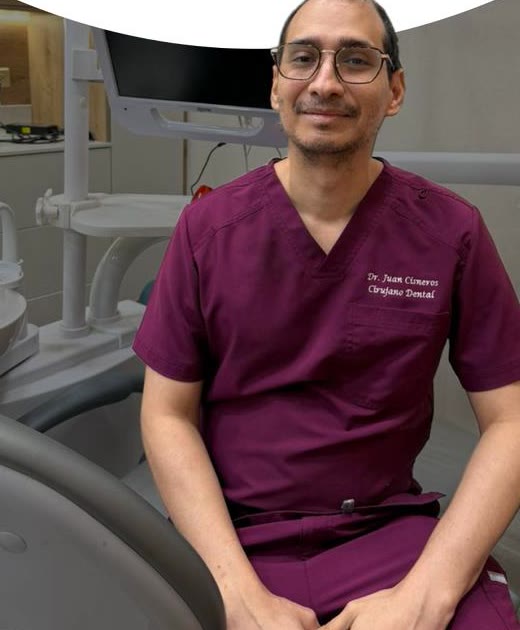
A smile makeover is not judged on the day you get it. It is judged five and ten years later. That is why I would rather be asked “how do you do it?” than “how fast can you do it?” — Dr. Juan Cisneros, Medical Director
Materials: what goes into your mouth
Two crowns can look identical in a photo and be completely different products. Ask what the piece is made of and who makes it. We work with zirconia and lithium disilicate ceramics (Ivoclar IPS e.max), and every piece is designed and made in our own in-house dental lab, not sent out to the lowest bidder. If something needs adjusting, the people who made it are in the same building.
Raw material matters for the same reason it matters in anything you plan to keep for years. A clinic that will not tell you the brand and the material is telling you something.
The steps a careful clinic does not skip
- Diagnosis before design. X-rays or a scan, a gum and bite check, and treatment of any decay or infection first. A beautiful crown on an unhealthy tooth is not a result.
- The most conservative plan that works. Sometimes that is eight ceramic units. Sometimes it is whitening and two veneers. A good plan can be smaller than the one you came asking for.
- Digital design you approve. You see the proposed smile and agree to it before your teeth are touched.
- Provisionals and adjustments. Time to live with the new shape and bite, and to change it.
- Final ceramics made without a stopwatch. Fit and shade checked before cementing.
- Follow-up and a warranty. A written commitment about what happens if something needs attention after you fly home.
This article is general information, not a diagnosis or a treatment plan. What is right for you depends on your case and must be confirmed with a clinical evaluation. Reviewed by Dr. Juan Cisneros, Medical Director, Panamá Sonríe.
Questions to ask any clinic, anywhere
Use these with us too. A serious clinic welcomes them:
- Who is the dentist, and what is their license number?
- Will my teeth get veneers or crowns, and why? How much tooth will be removed?
- Which ceramic do you use, which brand, and who makes the pieces?
- Do I get to see and approve the design, and wear provisionals first?
- How many days does the plan really need, and how many visits?
- What is covered by the warranty, and how do you help me once I am home?
If the honest answer to “how long does it need?” is longer than the trip you are being sold, believe the answer, not the package.
Where we stand
We are not trying to be the fastest clinic you can fly to, and we are not trying to be the cheapest. We compete on quality. If you are looking for a place that gives you a warranty and follows every correct procedure to protect your health and the quality of the result, that is who we are.
In practice that means nearly 20 years of track record in Panama, a licensed team led by our Medical Director, a smile design of 8 ceramic units from $3,800 planned digitally, ceramics made in our own lab, a written plan with an exact price in US Dollars, and a realistic timeline. It also means that sometimes our answer is “you need less than you think”. Panama helps on the practical side: the US Dollar is the official currency and Panama City is a short nonstop flight from many U.S. cities.
The saving compared with the U.S. is real. It only counts if the work lasts.
Ask us how, not how fast
Start with a video consultation and a case study: a licensed team, a written plan, an exact USD price, and an honest answer about what your smile really needs.
Keep reading
Frequently asked questions
What are “Turkey teeth”?
“Turkey teeth” is a popular nickname for fast, low-cost smile makeovers done abroad in a few days, usually with a full set of crowns. The term became associated with over-prepared teeth and very white, uniform results. It describes a speed-first way of working, not a country: rushed dentistry can happen anywhere, and careful dentistry can too.
Why is speed a problem in a smile makeover?
Because teeth and gums are living tissue. A proper makeover needs a diagnosis, a conservative plan, time to test the new bite and shape with provisionals, and a lab that is not rushing. When everything is compressed into a few days, healthy tooth structure is often removed unnecessarily and problems appear later, when you are already home.
What should I look for instead of the fastest or cheapest option?
Look for a licensed dentist who gives you a written plan, tells you which materials are used (for example zirconia or lithium disilicate ceramic), prepares teeth as conservatively as possible, lets you approve the design before anything is final, and offers a warranty and follow-up after you fly home.
How does Panamá Sonríe work differently?
We start with a video case study and a clinical evaluation, design the smile digitally, and make every ceramic piece in our own in-house lab with zirconia or lithium disilicate. You get a written plan with an exact USD price and a realistic timeline, and we tell you honestly when less treatment is the right answer.