
All-on-4 vs All-on-6: Which One Do You Actually Need?
All-on-4 or All-on-6? How your CT scan decides, the cost in Panama (from $15,995 vs $17,950 per upper or lower), timelines and questions to ask.
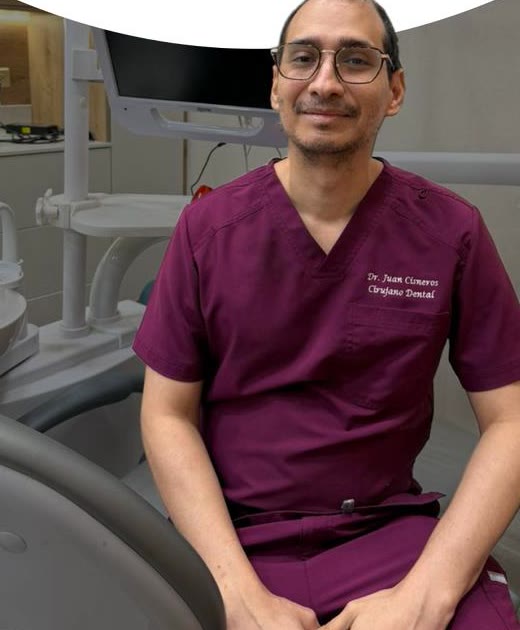
If you have lost most of your teeth, or your remaining teeth cannot be saved, you have probably seen two names: All-on-4 and All-on-6. Both replace a full upper or lower set of teeth with a fixed bridge screwed onto implants. The difference is the number of implants, and the right number is decided by your bone, not by a sales brochure.
- All-on-4 uses four implants per upper or lower set, the back two tilted on purpose to avoid the sinus or the nerve. All-on-6 adds two implants when there is enough bone.
- Neither is "better" in general. Your CT scan decides which one is safer and longer-lasting for you.
- At Panamá Sonríe, All-on-4 is from $15,995 per upper or lower set and All-on-6 from $17,950 per upper or lower set, with a fixed zirconia bridge made in our own lab.
- Both are planned over roughly 4-6 months, sometimes up to a year, because the implants need about 3-6 months to fuse with the bone. Fixed teeth on the day of surgery are possible when the case is well planned.
What is the difference between All-on-4 and All-on-6?
The difference is the number of implants holding your fixed bridge: four or six per upper or lower set. All-on-4 places two straight implants in the front and two tilted implants toward the back, to reach good bone while avoiding the sinus or the nerve. All-on-6 adds two implants, spreading the biting force over more support when the bone allows.
In both cases the result is the same kind of prosthesis: a full fixed bridge that is screwed onto the implants. You do not take it out at night like a denture; only your dentist removes it for maintenance.
| All-on-4 | All-on-6 | |
|---|---|---|
| Implants per upper or lower set | 4 (two tilted toward the back) | 6 |
| Bone needed | Less; tilted implants avoid grafts in many cases | More bone along the jaw |
| Bite force distribution | Over 4 points | Over 6 points |
| Typical candidates | Limited bone at the back, wish to avoid grafts | Enough bone, strong bite, larger jaws |
| Panamá Sonríe price | From $15,995 per upper or lower set | From $17,950 per upper or lower set |
| Final bridge | Fixed zirconia, made in our in-house lab | Fixed zirconia, made in our in-house lab |
Is All-on-6 better than All-on-4?
Not automatically. All-on-6 is better when your bone can hold six implants well; All-on-4 is better when it cannot, because it avoids grafts and works with the bone you have. Published studies on the All-on-4 concept report high implant and prosthesis survival [1], [2]. What matters most is the plan: implant positions, bone quality, and a precise, well-designed bridge.
Think of it this way: six implants placed in weak bone, or squeezed into poor positions, are not stronger than four implants placed in solid bone at the right angles. More implants also mean more surgery and a higher price. That is why a good clinic does not offer you "4 or 6" from a menu. It reads your CT scan first.
When we lean toward All-on-6:
- There is enough bone height and width along the jaw, including toward the back.
- You have a strong bite or clench and grind your teeth (bruxism), so spreading the force helps.
- The opposing side has natural teeth or another fixed bridge, which loads the prosthesis more.
When All-on-4 is usually the safer path:
- The bone at the back has resorbed after years without teeth or with a denture.
- The sinus (upper jaw) or the nerve (lower jaw) leaves little room for straight implants at the back.
- You want to avoid, when possible, a sinus lift or a large bone graft.
How does a CT scan decide between All-on-4 and All-on-6?
A 3D CT scan (CBCT) measures how much bone you have, how dense it is, and where the sinus and nerve are. With those measurements we plan each implant virtually, choose the number and angle, and print a surgical guide. If six implants fit safely, we can propose All-on-6; if not, All-on-4.
Our planning steps:
- CT scan and photos. If you already have a CBCT from home, send it to us in DICOM format with your free digital evaluation. If you don't, we take it here.
Talk to us about your case even if you don't have photos, X-rays or anything ready, or you feel shy about sending a photo: get to know us, tell us what's going on and we'll guide you. What we ask for (photos, X-rays, a CT scan) gives you more clarity and a more accurate roadmap; we ask for it for you, so we can do a good job. But if you'd rather come without any of that, we'll still see you.
- Virtual planning. Each implant is positioned on the 3D image, away from the sinus and nerve.
- Guided surgery. A surgical guide transfers that plan to your mouth, so each implant goes where it was planned.
- Implants. We use original MIS implants (an Israeli manufacturer, part of Dentsply Sirona), choosing the V3, C1 or LYNX line according to the width and density of your bone.
- Photogrammetry for the final bridge. Once the implants are in, we record each implant's position with our Shining 3D Aoralscan Elite, which combines intraoral scanning and photogrammetry in one device [3].
Guided surgery is planned with MIS (MGUIDE and MCENTER), plus our own prosthetic planning: a simulated set of your final teeth guides where each implant goes, so the implants serve the smile and not the other way around.
Why photogrammetry, and why the scanner matters. Photogrammetry is a high-precision photographic technique. In a 2025 review of 13 studies, it was more accurate than standard intraoral scanning in 10 of them for full-mouth implant cases [4], and a 2026 review reached a similar conclusion [5]. Most studies were done in the lab, so we say it with caution. A more accurate record helps the bridge seat without stress on the implants. Not every scanner can do this: new entry-level scanners cost from about US$7,000-12,000 at U.S. distributors and many have no photogrammetry, while the Aoralscan Elite costs about US$20,000-24,000 in the U.S., depending on the version [3], [6]. We started with a scanner of about US$4,000; moving to one of about US$20,000 changed our speed and fidelity.
How much do All-on-4 and All-on-6 cost in Panama vs the U.S.?
At Panamá Sonríe, All-on-4 starts from $15,995 per upper or lower set and All-on-6 from $17,950 per upper or lower set, in U.S. dollars, with a fixed zirconia bridge made in our own lab. In the United States, All-on-4 typically runs about $20,000–$30,000 per upper or lower set.
| Treatment | Typical U.S. price range | Panamá Sonríe, from |
|---|---|---|
| All-on-4, fixed zirconia set, per upper or lower set (our price includes a definitive fixed zirconia restoration; U.S. ranges may include acrylic or zirconia) | $20,000–$30,000 | $15,995 |
| All-on-6, fixed zirconia set, per upper or lower set (our price includes a definitive fixed zirconia restoration; U.S. ranges may include acrylic or zirconia) | Not published | $17,950 |
U.S. figures are typical price ranges; actual prices vary by city and case. Dental prices only: flights and hotel are paid separately, directly by you.
Our All-on-4 and All-on-6 treatments include a definitive fixed zirconia restoration fabricated in our in-house dental laboratory. Published U.S. full-arch prices may include different restorative materials, such as acrylic-based hybrid prostheses or zirconia, and may vary in what they include. U.S. price ranges are general market references, not like-for-like zirconia comparisons or promised savings.
Sources: Pearl dental cost data based on ADA fee-survey data (2026); ClearChoice ranges reported by SeniorLiving.org (2026); Real Dental Costs (2026). Per upper or lower arch; both arches = two arches. U.S. prices vary by city, materials and case. All-on-6: we do not show a U.S. range because we found no solid national source for it. Links (accessed Nov 12, 2026): Pearl, All-on-4 · ClearChoice via SeniorLiving.org · Real Dental Costs.
What is quoted separately, after your evaluation: components such as multi-unit abutments (depending on the implant selected), surgical guides, bone grafting, sinus lift and additional procedures. Nothing is done or charged without your approval. If you need both upper and lower, the price is adjusted to the complexity of your case.
Why zirconia and not acrylic for the final bridge? Published studies report higher long-term survival and fewer delayed complications with zirconia. We use a high-strength multilayer zirconia, milled in our own lab. We explain the evidence in zirconia vs acrylic implant bridges, and why a much cheaper offer can't use the same parts in cheap All-on-4: what's behind the price.
How long does All-on-4 or All-on-6 take?
Plan on roughly 4-6 months, and in some cases up to a year, across several visits. The implants need about 3-6 months to fuse with the bone (osseointegration) before the final zirconia bridge goes in. Fixed teeth on the same day (immediate loading) are possible when the case is well planned and the implants are stable enough on the day of surgery. How long each stay lasts always depends on the study of your case; for complex cases, a stay of 7-10 days is ideal. The ideal timing depends on your case; that's why we first do a proper study of it.
How we work during those months:
- Temporaries first. You wear a provisional bridge while the implants heal. We use it to fine-tune your bite, the shape of your teeth and how you speak. It can take 2 to 3 sets of temporaries.
- Then the definitive zirconia. When everything is right, we mill the final bridge in our lab. Only minor adjustments remain.
- Trips. Most patients need at least two trips: surgery, and the final bridge months later. Your quote states how many trips your case needs before you book a flight. See our Panama dental trip checklist.
Our commitment on timing: once your evaluation confirms you are a candidate, your treatment plan sets a schedule and a delivery date for each stage, and we commit to the delivery date agreed in your treatment plan. What we will not do is give the same short timeline to every patient before seeing their CT scan: rushing a full-set case is one of the main reasons these treatments fail.
Who is a candidate for All-on-4 or All-on-6?
Most healthy adults who have lost, or are about to lose, all the teeth of an upper or lower set can be candidates, but it is a medical decision. Smoking is the biggest risk factor. Well-controlled diabetes has similar implant survival to non-diabetics. Osteoporosis alone is not a contraindication, though some medications, such as IV bisphosphonates, can be.
We evaluate your medical history, medications and CT scan, and we would rather tell you "no" than promise something that cannot be done safely.
Who performs the surgery?
Our Medical Director, Dr. Juan Cisneros, personally leads full-mouth surgeries. He is a graduate of the University of Panama, licensed by Panama's Consejo Técnico de Salud since 2013, and since then has led more than 500 full-mouth rehabilitations of every kind, about 100 of them complex All-on-4 and All-on-6 cases (including patients poorly rehabilitated elsewhere and implant removals). Before becoming a dentist he was a dental technician specialized in fixed prosthetics and implants, which is why the surgery and the lab work are planned as one.
What warranty comes with All-on-4 or All-on-6?
Every patient, local or from abroad, receives our 2-year written warranty on the implants we place and the zirconia bridge we make, with the conditions spelled out in writing: what is covered, what is not, and how to keep it active with yearly check-ups. The MIS implants are also backed by the manufacturer's warranty.
General information, not a diagnosis. Your case is confirmed with a clinical evaluation. Reviewed by Dr. Juan Cisneros, Medical Director, Panamá Sonríe.
Let's talk about your case
Find out which one fits you. Contact us here or call us free: +1 (877) 373-6040. Your video evaluation is free, with no commitment. You can also write to us on WhatsApp: +507 6140-5700.
Keep reading
Frequently asked questions
What is the difference between All-on-4 and All-on-6?
The number of implants per upper or lower set: four or six. All-on-4 tilts the two back implants to reach good bone and avoid the sinus or nerve, often without grafts. All-on-6 adds two implants when there is enough bone, spreading the bite force. Both hold a fixed bridge that does not come out like a denture.
Is All-on-6 stronger than All-on-4?
Not automatically. Six implants spread the force over more points, which helps when the bone is good and the bite is strong. When the bone is limited, four well-placed, tilted implants are often the safer choice. Your CT scan, not a menu, decides which option fits your case.
How much does All-on-6 cost in Panama?
At Panamá Sonríe in Panama City, All-on-6 starts from $17,950 per upper or lower set and All-on-4 from $15,995 per upper or lower set, in U.S. dollars, with a fixed zirconia bridge made in our own lab. The surgical guide, components, extractions, sedation and bone grafts are quoted separately after your evaluation.
How long does All-on-4 take from start to finish?
Roughly 4-6 months, sometimes up to a year, across several visits, because the implants need about 3-6 months to fuse with the bone before the final zirconia bridge. Fixed teeth on the day of surgery are possible when the case is well planned and the implants are stable enough. Your quote states how many trips your case needs.
Which implants do you use for All-on-4 and All-on-6?
Original MIS implants, from an Israeli manufacturer that is part of Dentsply Sirona. We choose the V3, C1 or LYNX line according to the width and density of your bone and the space available, and place them with guided surgery planned on your CT scan.
Sources (checked November 11, 2026)
- Maló P, Rangert B, Nobre M. "All-on-Four" immediate-function concept with Brånemark System implants for completely edentulous mandibles: a retrospective clinical study. Clin Implant Dent Relat Res. 2003;5 Suppl 1:2-9. doi:10.1111/j.1708-8208.2003.tb00010.x
- Patzelt SB, Bahat O, Reynolds MA, Strub JR. The all-on-four treatment concept: a systematic review. Clin Implant Dent Relat Res. 2014;16(6):836-55. doi:10.1111/cid.12068
- Shining 3D, "New product: Aoralscan Elite" (manufacturer, 10 Sep 2024): shining3ddental.com. U.S. reference prices: Roe Dental Lab, Starcona.
- Pozzi A, Arcuri L, Carosi P, et al. Photogrammetry versus intraoral scanning in complete-set digital implant impression: a systematic review and meta-analysis. Clin Implant Dent Relat Res. 2025;27(3):e70059. doi:10.1111/cid.70059
- Jain S, Daak HA, Someli LA, et al. Accuracy of stereophotogrammetry technique versus intraoral scanners for complete-set implant digital impressions: a systematic review and meta-analysis. Eur J Dent. 2026;20(1):34-48. doi:10.1055/s-0045-1806935
- Institute of Digital Dentistry, Aoralscan Elite launch; entry-level reference: Medit i600, Proto3000. - MIS Implants Technologies (Dentsply Sirona group), product lines V3, C1 and LYNX, MGUIDE: https://www.mis-implants.com/ - Panamá Sonríe, All-on-4 and All-on-6 in Panama (prices, U.S. ranges and what is quoted separately) and Warranty.
Scanner prices are public market references, not our treatment prices. This article is general information and does not replace a clinical evaluation. Every case is different; your treatment plan is confirmed with your CT scan.