
Cheap All-on-4: why a price that's too low can't sustain quality
A $10,000 All-on-4, upper and lower, with grafts and a sinus lift? Public prices and research show what a full-mouth job built to last really costs.
If you're shopping for an All-on-4 or All-on-X, you've probably seen offers that sound impossible: "fixed teeth, upper and lower, with bone grafting and a sinus lift for $10,000." It's tempting. But a full set of upper or lower teeth has real costs that don't disappear with good advertising. Here is a plain-language look, with public prices and peer-reviewed research, at what goes into an All-on-4 built to last, and why a price that's too low deserves a lot of questions.
- Original parts have a floor price. A single implant from a value brand costs the clinic about US$215-240; the only publicly available premium list price was US$450 per implant (2014), and it hasn't gone down.
- An All-on-4 is much more than 4 implants: multi-unit abutments, screws, analogs, scan bodies, graft materials, a CBCT scan, planning, a temporary bridge and a final one.
- Material has a floor price, too. Good-quality zirconia costs 300-400% more than a generic one.
- Precision costs money. Recording where each implant sits, ideally with photogrammetry, takes high-end equipment that cheap offers rarely have.
- Cheap shows up over the years. Original parts fit better than "compatible" ones, conical connections lose less bone and less screw tension, and better prosthesis materials wear and break less.
- Quality isn't always visible on day one. A job can look "acceptable" at first; what separates good from bad is how it looks at 5, 10 or 20 years.
What an All-on-4 (and All-on-X) is
It replaces all the upper or all the lower teeth with a fixed bridge (you don't take it out) screwed onto 4 implants (All-on-4) or onto 5, 6 or more (All-on-X). The bridge is called a hybrid prosthesis. A temporary usually goes in first; once bone and gums heal, the final one is made.
Well indicated and well done, it is predictable: in a 2026 review, All-on-4 prosthesis survival was 85% to 100% for up to 20 years, and implant survival 89.7% to 97.9% [1]. But the same review notes that biological and technical complications "remain clinically relevant." That's where the quality of every part makes the difference.
What you're really paying for: the cost, part by part
1. Implants: brands with years of research behind them
Not all implants are equal. There are more than 220 brands from about 80 manufacturers, and some are sold without any demonstrated adherence to international standards [2]. In a review of 5-year evidence, only three systems had at least two independent long-term studies; undocumented copies were not accepted [3].
That doesn't mean an expensive brand is "better" because it's expensive: among systems that do have clinical trials, none was shown to be superior [4]. The real difference is documented versus undocumented: market references such as Nobel Biocare and Straumann, and brands like MIS (part of Dentsply Sirona), have years of published research, manufacturing controls and original parts available long-term. At Panamá Sonríe we use MIS implants, and everything is original MIS: implants, multi-unit abutments and components.
What an implant costs the clinic (public prices for the parts, not our price to patients):
| Item | Approximate public price | Source |
|---|---|---|
| Value-brand implant (US) | US$215-240 | Implant Direct official catalog, Oct 2026 [12] |
| Discount-brand implant | US$138-156 | Blue Sky Bio official store [13] |
| Premium-brand implant (Straumann Bone Level) | US$450 (2014 list; no public price today, and it's not lower) | Straumann USA 2014 catalog [14] |
Premium brands don't publish current list prices, so we give the only public figure and say so.
2. The parts nobody sees
Each implant gets a multi-unit abutment (the "adapter" the bridge screws onto), its screws, an analog (the replica of the implant the lab works on) and a scan body (the piece the scanner reads to know exactly where each implant is). They're small, but the bridge only seats without stress if they're precise.
- An original multi-unit abutment from a value brand costs about US$140 [15]. A "compatible" one from another manufacturer can sell for US$18-40 [16].
- A multi-unit scan body from a discount brand is about US$45 [13].
Why it matters: a systematic review of 40 studies found that original abutments have better fit, less microleakage, less micromotion and better fatigue strength than non-original ones; the current clinical recommendation is to use original parts [5]. A few microns today can be a loose screw or a broken part tomorrow.
3. Bone grafts and sinus lifts
When bone is missing, it's rebuilt with graft material covered by a membrane. A sinus lift raises the floor of the sinus (the air space above the upper back teeth) to gain bone height. For reference on materials alone: 0.5 g of a well-known graft (Bio-Oss) costs the clinician roughly US$105-150 and a resorbable membrane (Bio-Gide, 25×25 mm) about US$190-245 [17]. A sinus lift usually needs several times that amount, plus surgical time and healing.
4. CBCT, planning and surgical guide
Before surgery you need a 3D CBCT scan, a digital scan and often a surgical guide. In the US, a CBCT costs the patient about US$150-350 and a lab-made guide around US$200 [17].
The guide earns its cost: in randomized trials, guided implant placement was significantly more accurate than freehand [22], and a fully guided approach reduces deviation at the implant entry point by about 1.18 mm [23]. In a laboratory study using MIS's planning software (Mguide), the fully guided technique was the most accurate; switching to a half-guided approach added 0.6 to 0.8 mm of deviation, and freehand added more [24].
5. The bridge: quality zirconia, technology and a master's hands
This is one of the biggest differences. A 2026 review found that full-set metal-zirconia bridges had much less wear (risk ratio 0.29) and less peri-implantitis (risk ratio 0.67) than metal-acrylic ones [6]. And in All-on-4, metal-acrylic bridges fractured in 7.3% to 36.7% of cases versus 7.27% to 18.2% for metal-ceramic [1].
But not just any zirconia will do. The German S3 guideline and its underlying review state that for long bridges and full-set work, only high-strength zirconia (3Y-TZP, over 1,000 MPa) has clinical support, and that all-ceramic full-set bridges call for caution given their complication rate (estimated chipping of 6.9% per year) [7], [8]. Choosing the material, designing it well, milling it on precision equipment and finishing it by hand is specialist work.
The material itself has a floor price. Good-quality zirconia costs 300-400% more than a generic one, before any design, milling, hand finishing or try-ins. For full-mouth bridges we use a high-strength multilayer zirconia, milled in our own lab. More on the material choice in zirconia vs acrylic implant bridges.
6. Recording where each implant is: the scanner and photogrammetry
For the final bridge to seat without stress, the lab needs to know the exact position of every implant. Not all equipment does this equally well. New entry-level intraoral scanners cost from about US$7,000-12,000 at U.S. distributors, and many have no photogrammetry. The Shining 3D Aoralscan Elite, which we use, combines intraoral scanning and photogrammetry in one device and costs about US$20,000-24,000 in the U.S., depending on the version [27], [28].
Photogrammetry records each implant's position with a high-precision photographic technique. In a 2025 review of 13 studies, it was more accurate than standard intraoral scanning in 10 of them for full-mouth implant cases [29], and a 2026 review reached a similar conclusion [30]. Most studies were done in the lab, so we say it with caution. A more accurate record helps the bridge seat without stress on the implants. We know the difference first-hand: we started with a scanner of about US$4,000, and moving to one of about US$20,000 changed our speed and fidelity.
Do the math yourself
Add up only what the clinic pays for the parts and planning, for one upper or lower, with original parts and the public prices above. These are costs to the clinic, not our prices (rough estimate):
| Item | Estimate |
|---|---|
| 4 premium-brand implants (2014 public list, higher today) | from ~US$1,800 |
| 4 original multi-unit abutments (value-brand price) | ~US$560 |
| Screws, analogs, scan bodies and temporary cylinders | several hundred dollars |
| Graft and membranes for a sinus lift | several hundred dollars or more |
| CBCT, digital scan and guide | ~US$350-550 |
| Temporary bridge | additional cost |
| Final zirconia bridge (material, design, milling, hand finishing) | additional cost |
Leaving the grafts aside, implants, abutments, small parts and planning alone come to roughly US$3,000 per upper or lower, and about US$6,000 for both, before the grafts and sinus lift, two temporary bridges, two final zirconia bridges, the surgeon, the team, anesthesia, follow-up visits and the cost of running a clinic. If you're offered upper and lower, with grafts and a sinus lift, for $10,000, the rest of that list would have to fit in what's left. The honest question is: which of these parts was cut?
Let's be clear: we've seen ads for All-on-4 upper and lower for $10,000. Even for only the upper or only the lower, that would already be a low price. For both, with guided surgery, original implants and components, grafts, a sinus lift, a temporary and a final bridge in quality zirconia, the numbers don't add up. Something on that list isn't included, or isn't what it seems.
What popular dental-tourism destinations advertise
For a market reference, we reviewed public ads from clinics and booking portals in two of the most popular dental-tourism destinations (November 2026). Here's what they show:
- Price per upper or lower: from about US$2,000 for the lowest offers up to US$8,000-9,000 or more when they include a recognized implant brand and a final zirconia bridge.
- The cheapest offers usually come with value-brand implants, acrylic bridges or temporary teeth only. Zirconia and better-documented brands raise the price, sometimes by several thousand dollars per upper or lower.
- Bone grafts and sinus lifts are almost always extra, quoted after the CBCT scan. Some published guides put a sinus lift at hundreds to thousands of dollars more.
- It's usually two trips, 3 to 6 months apart (surgery and temporary, then the final bridge), and sometimes a third if grafting was needed.
In other words: even in those destinations, upper and lower with final zirconia and a recognized brand comfortably exceed US$10,000, before grafts and sinus lifts. A $10,000 offer for upper and lower, grafts and sinus lift included, falls below even the cheapest ads that include a final zirconia bridge.
Cheap shows up over the years
A job can look "acceptable" on day one. The difference shows later:
- With implants, most problems come late. Modern implants show about 96% survival at 10 years [9], but at 20 years the figure drops to 78% when patients lost to follow-up are accounted for [10]. And with implant bridges, only 66% of patients were free of any complication at 5 years; the authors urge clinicians to "choose reliable components and materials" [11].
- The connection matters. A network meta-analysis of 14 studies found that conical connections ("Morse taper") preserve bone around the implant better than external connections [18]. Under repeated loading, external-connection screws lost on average 23.9% of their tightening torque versus 16% for conical ones [19].
- The bridge material matters: less wear and less peri-implantitis with metal-zirconia than with metal-acrylic [6].
None of this shows in the delivery-day photo. All of it shows at the checkups that follow.
Hiding the implant is a science, too
No visible metal and no gray gum line isn't luck. It depends on decisions made before surgery:
- Implant depth. Too shallow, and there's no room for the tooth to "emerge" naturally from the gum, so metal is more likely to show. Well positioned, the lab can create a smooth transition.
- Emergence profile (how the tooth comes out of the gum). A 2025 review by the Academy of Osseointegration and the American Academy of Periodontology links abutments at least 2 mm tall, conical connections, an emergence angle under 30 degrees and a concave or straight profile with less bone loss and lower peri-implantitis risk [20].
- Gum and bone thickness. With thin gums (2 mm or less), a classic study found up to 1.45 mm of bone loss around the implant [21]. That's why gum or bone sometimes has to be thickened first, which also costs money.
- The abutment and conical connection. An original, well-sealed conical fit protects bone and gum long-term [5], [18].
Planning all this takes a CBCT scan, digital design and specialist time. It isn't what you can cut to reach a bargain price.
Questions to ask before you decide
- Which implant and abutment brand will I get? Are they original parts? Ask for an "implant passport": brand, model, diameter, length and lot number.
- What is the final bridge made of, and the temporary? High-strength zirconia, metal-acrylic, something else?
- Does the price include the temporary, the final bridge, grafts, the sinus lift, the CBCT and follow-up visits?
- Who designs and makes the bridge, and where?
- What happens if an implant isn't stable on surgery day, or if something fails after a year?
A serious clinic answers all of this in writing before you start.
How we do it at Panamá Sonríe
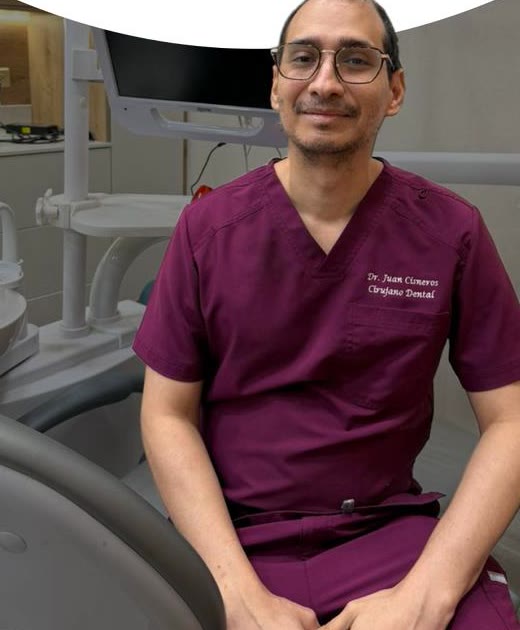
Our principle is quality. Dr. Juan Cisneros, our Medical Director, and his team plan every All-on-4 or All-on-X starting from the teeth: we design the smile you'll have first and, from there, decide where and how deep the implants go.
We work hand in hand with our own 100% digital laboratory, in the same clinic in Panama City:
- Original MIS implants, with original MIS multi-unit abutments and components: no "compatible" parts.
- Guided surgery in all our implant cases: we send the CBCT and digital scan to MIS (part of the Dentsply Sirona group), which plans the case with us in MGUIDE and MCENTER. We add our own prosthetic planning: a simulated set of your final teeth guides where each implant goes.
- AccuFab-CEL 3D printers and a FabCure 2 unit in our lab.
- Shining 3D Aoralscan Elite Wireless intraoral scanner, with photogrammetry, to record implants and gums in 3D.
- MetiSmile facial scanner, which also records how you move when you bite, so your new teeth fit your face.
- In-house digital design and milling, with direct communication between the dentist and the lab.
- High-strength multilayer zirconia for the final bridge, shaped, textured and colored by hand under our master ceramist, Esteban Pulido.
Our rule: we don't do work that is destined to fail. For us, clinical failure is almost always poor planning. That's why we don't restore a tooth with a poor prognosis, and we don't rehabilitate a mouth when there are bite problems or bruxism (clenching or grinding) without first proposing a comprehensive treatment that addresses them. Following that protocol is what makes success possible.
Experience you can measure. Dr. Juan has led more than 500 full-mouth rehabilitations since he was licensed in 2013. When the correct protocol is followed, we have had no warranty claims, according to our records.
How long it takes always depends on the study of your case. Implants need about 3-6 months to bond with the bone before the final bridge; fixed teeth on the day of surgery are possible when the case is well planned and the implants are stable. Price ranges are on our All-on-4 and All-on-6 page: All-on-4 from $15,995 and All-on-6 from $17,950 per upper or lower. Which one you need is explained in All-on-4 vs All-on-6.
Every case is different: your plan and price are confirmed at your evaluation, with your CBCT in hand. What we can tell you now is where we don't cut corners.
This guide is general information and does not replace a clinical evaluation. Material, part and equipment prices quoted are approximate public references for what a clinic pays; they may change and they are not patient treatment prices. Reviewed by Dr. Juan Cisneros, Medical Director of Panamá Sonríe.
General information, not a diagnosis. Your case is confirmed with a clinical evaluation. Reviewed by Dr. Juan Cisneros, Medical Director, Panamá Sonríe.
Let's talk about your case
Want to know what your case needs? Contact us here or call us free: +1 (877) 373-6040. Your video evaluation is free, with no commitment. You can also write to us on WhatsApp: +507 6140-5700.
Keep reading
Frequently asked questions
Why are some All-on-4 offers so cheap?
Because something gets cut: the brand or originality of the implants and abutments, the final bridge material (for example acrylic instead of high-strength zirconia), CBCT-based planning, the number of follow-ups or specialist time. It doesn't always show on day one, but it shows over the years.
How much does an All-on-4 really cost?
It depends on the case: available bone, whether grafting or a sinus lift is needed, how many implants and what the bridge is made of. At Panamá Sonríe, All-on-4 starts from $15,995 and All-on-6 from $17,950 per upper or lower, with a fixed zirconia bridge; grafts, sinus lifts and extra components are quoted after your evaluation. The final price is confirmed with your CBCT in hand.
Are "compatible" implant parts the same as original ones?
Not necessarily. A review of 40 studies found that original abutments have better fit, less leakage and better fatigue strength than non-original ones, and the current clinical recommendation is to use original parts.
What is a conical or Morse taper connection?
A cone-shaped joint between the implant and the abutment that fits very precisely. Studies link it with less bone loss around the implant and with screws that lose less tightening torque than external connections.
Why does implant metal sometimes show?
Usually because the implant was placed too shallow, the gum or bone is very thin, or the emergence profile was poorly designed. It's prevented by planning depth, tissue thickness and abutment shape before surgery.
Does an acrylic bridge last as long as a zirconia one?
On average, no. Full-mouth metal-zirconia bridges showed less wear and less peri-implantitis than metal-acrylic ones, and acrylic bridges fracture more often in All-on-4 studies.
Sources
According to PubMed (DOI linked when PubMed returns one) and official sources:
- Huber BR, et al. All-on-Four rehabilitation: a systematic review of clinical management, workflow and complications. Dent J (Basel). 2026;14(9):541. doi:10.3390/dj14090541
- Jokstad A, et al. Quality of dental implants. Int Dent J. 2003;53(6 Suppl 2):409-43. doi:10.1111/j.1875-595x.2003.tb00918.x
- Laurell L, Lundgren D. Marginal bone level changes at dental implants after 5 years in function: a meta-analysis. Clin Implant Dent Relat Res. 2011;13(1):19-28. doi:10.1111/j.1708-8208.2009.00182.x
- Esposito M, Ardebili Y, Worthington HV. Interventions for replacing missing teeth: different types of dental implants. Cochrane Database Syst Rev. 2014;(7):CD003815. doi:10.1002/14651858.CD003815.pub4
- Rizvi N, et al. Accuracy of original vs. non-original abutments using various connection geometries for single unit restorations: a systematic review. J Prosthodont. 2022;31(7):e21-e52. doi:10.1111/jopr.13464
- Marinkovic D, et al. Prosthetic and biological complications of metal-zirconia versus metal-acrylic implant-supported screw-retained complete-set prostheses: a systematic review and meta-analysis. J Clin Exp Dent. 2026;18(5):e704-15. doi:10.4317/jced.63882
- Bishti S, et al. Systematic review evaluating the influence of veneering design on the clinical outcome of all-ceramic implant-supported 3-4 units and full set fixed dental prostheses. J Esthet Restor Dent. 2026;38(9):1691-1707. doi:10.1111/jerd.70177
- Waltenberger L, et al. German S3 guideline on implant-supported all-ceramic restorations. Int J Implant Dent. 2025;11(1):53. doi:10.1186/s40729-025-00641-7
- Howe MS, Keys W, Richards D. Long-term (10-year) dental implant survival: a systematic review and sensitivity meta-analysis. J Dent. 2019;84:9-21. doi:10.1016/j.jdent.2019.03.008
- Kupka JR, et al. How far can we go? A 20-year meta-analysis of dental implant survival rates. Clin Oral Investig. 2024;28(10):541. doi:10.1007/s00784-024-05929-3
- Pjetursson BE, et al. A systematic review of the survival and complication rates of implant-supported fixed dental prostheses (FDPs) after a mean observation period of at least 5 years. Clin Oral Implants Res. 2012;23(Suppl 6):22-38. doi:10.1111/j.1600-0501.2012.02546.x
- Implant Direct, official US catalog (Legacy3 US$240; simplyLegacy3 US$215), accessed 29 Oct 2026. implantdirect.com
- Blue Sky Bio, official store (implant US$156, US$138 for 10+; multi-unit scan body US$45), accessed Oct/Nov 2026. blueskybio.com
- Straumann USA, Product Catalog 2014 (Bone Level Roxolid SLActive, US$450). issuu.com/straumann
- Implant Direct, RePlant multi-unit abutment 6035-64 (US$140), accessed Nov 2026. implantdirect.com
- Public listings of "compatible" multi-unit abutments (US$18-40), accessed Nov 2026. Market reference; brands not named in the article.
- Market references for materials and services (Bio-Oss, Bio-Gide, CBCT, surgical guide) compiled in our internal research of 29 Oct 2026. Order of magnitude; verify before updating.
- Caricasulo R, et al. The influence of implant-abutment connection to peri-implant bone loss: a systematic review and meta-analysis. Clin Implant Dent Relat Res. 2018;20(4):653-64. doi:10.1111/cid.12620
- Sammour SR, et al. Impact of implant abutment connection designs and cyclic loading on screw stability in dental implants: a systematic review and meta-analysis. J Prosthet Dent. 2026;135(2):317.e1-14. doi:10.1016/j.prosdent.2025.09.035
- Lin GH, et al. The influence of prosthetic designs on peri-implant bone loss: an AO/AAP systematic review and meta-analysis. J Periodontol. 2025;96(6):634-51. doi:10.1002/JPER.24-0144
-
Linkevicius T, et al. The influence of soft tissue thickness on crestal bone changes around implants: a 1-year prospective controlled clinical trial. Int J Oral Maxillofac Implants. 2009;24(4):712-9. PMID 19885413.
-
Reiff FS, et al. Accuracy of freehand, static, and dynamic computer-assisted implant placement: a systematic review and meta-analysis. J Periodontal Res. 2026;61(2):111-37. doi:10.1111/jre.70047
- Gargallo-Albiol J, et al. Fully guided versus half-guided and freehand implant placement: systematic review and meta-analysis. Int J Oral Maxillofac Implants. 2020;35(6):1159-69. doi:10.11607/jomi.7942
- Quispe-López N, et al. Factors influencing the accuracy of guided surgery: an in vitro trial. Int J Oral Maxillofac Implants. 2023;38(1):120-9. doi:10.11607/jomi.9794
- MIS Implants, MGUIDE (planning and surgical guides). mis-implants.com
- Public ads from dental-tourism clinics and portals, accessed 5 Nov 2026 (names and links in our internal research file).
- Shining 3D, "New product: Aoralscan Elite" (manufacturer, 10 Sep 2024): shining3ddental.com. U.S. reference prices: Roe Dental Lab, Starcona.
- Institute of Digital Dentistry, Aoralscan Elite launch and Aoralscan ELF launch; entry-level reference: Medit i600, Proto3000.
- Pozzi A, Arcuri L, Carosi P, et al. Photogrammetry versus intraoral scanning in complete-set digital implant impression: a systematic review and meta-analysis. Clin Implant Dent Relat Res. 2025;27(3):e70059. doi:10.1111/cid.70059
- Jain S, Daak HA, Someli LA, et al. Accuracy of stereophotogrammetry technique versus intraoral scanners for complete-set implant digital impressions: a systematic review and meta-analysis. Eur J Dent. 2026;20(1):34-48. doi:10.1055/s-0045-1806935
Keep reading: All-on-4 in Panama · All-on-4 vs All-on-6 · Zirconia vs acrylic implant bridges · Too cheap or too fast to be true? · Is a dentist an artist?