
Zirconia vs Lithium Disilicate (E.max) Veneers: An Honest Comparison From a Clinic With Its Own Lab
Both are ceramics, and both can look beautiful in a photo on the last day. For bonded veneers, the published research and our own laboratory lead to the same answer: lithium disilicate. Here is the evidence, the honest exceptions, and why “we only do zirconia veneers” usually says more about the workshop than about your teeth.
- For veneers we use lithium disilicate (Ivoclar IPS e.max), not zirconia. Meta-analyses report about 97% survival at 10 years for lithium disilicate veneers; comparative data on zirconia veneers stops at about 3 years.
- The difference is chemistry: lithium disilicate is etched and silanated, bonding to enamel with a protocol proven for decades. Zirconia has no glass to etch and depends on sandblasting plus a primer, with little margin for error.
- At veneer thickness (0.5 mm), e.max transmits more light than even the most translucent zirconia in most studies.
- Zirconia is the right choice for crowns, full arches and heavy grinders. We use it there every day.
- Not every “lithium disilicate” is e.max: lab tests show up to 2× differences in strength between brands. That is part of what a serious quote pays for.
Two ceramics, two different jobs
Lithium disilicate is a glass-ceramic: fine crystals held in a glass matrix. Zirconia is a polycrystalline oxide with no glass in it at all. Zirconia is much stronger as a block of material: conventional zirconia measures around 1,100–1,200 MPa of flexural strength, the newest “ultra-translucent” zirconias around 570–690 MPa, and lithium disilicate around 350–450 MPa[10].
That number is the reason zirconia is a superb material for crowns and implant bridges. It is also the reason many people assume it must be the better veneer. It is not, because a veneer is a different object. A veneer is 0.3 to 0.7 mm of ceramic that gets its strength from being bonded to enamel; a crown gets its strength from its own bulk. So the question is not “which ceramic is stronger?” but “which ceramic bonds, looks natural at half a millimetre, and has the track record?”
Bonding: why a veneer lives or dies by its glue
With lithium disilicate the protocol is simple and old enough to have decades of data. Hydrofluoric acid etches the glass phase, a silane coupling agent creates a chemical link, and the resin cement does the rest. It is the most accepted surface treatment for glass-ceramics[1],[2]; fresh silane is the step that matters most, because skipping it can drop the bond from 22 MPa to 3 MPa after aging[3], and a dedicated ceramic primer outperforms “all-in-one” universal adhesives in a meta-analysis of 26 studies[4].
Zirconia cannot be etched that way, because there is no glass to etch. The protocol with evidence behind it is the APC concept: air-particle abrasion, an MDP-containing primer, and a composite resin cement[5]. Done correctly it is durable[6], and recent meta-analyses agree that sandblasting plus MDP is the only combination that holds up over time, while most other zirconia bonds weaken with aging[7],[8]. The catch is that it is technique-sensitive: a trace of saliva during try-in has to be removed with a specific cleaning step or the bond suffers[9].
To be fair to zirconia: in the laboratory, well-treated zirconia can bond as well as lithium disilicate after 150 days in water[10]. But in the one 2026 meta-analysis that looked specifically at veneers cemented with light-cured cement, lithium disilicate reached 25.4 MPa against 12.1 MPa for translucent zirconia[11].
What about the “new” zirconias sold as etchable, glass-coated or bondable like e.max? The lab results contradict each other: one 2026 study found that a lithium disilicate spray coating lost half its bond after thermocycling and that sandblasting remained the strongest option[12], and these coatings change the color and translucency of ultra-thin zirconia[13]. Clinically, a 3-year study of glass-coated zirconia veneers reported 6 of 50 debonded (12%) versus 0 of 50 lithium disilicate veneers[14], and the largest meta-analysis of veneers found 100% survival for zirconia at a mean of 2.6 years with, in the authors' words, no long-term data[15]. Promising, yes. Proven equivalent, no.
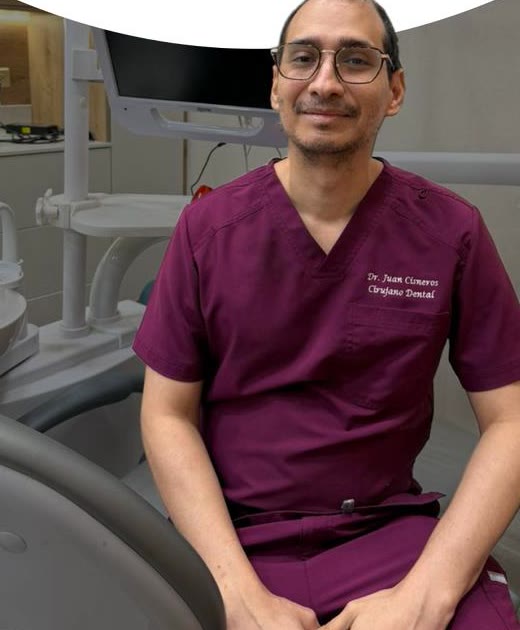
A veneer is not held in place by how strong the ceramic is. It is held by the bond. Lithium disilicate gives us a bond we have trusted for twenty years; with zirconia veneers we would be asking our patients to be the long-term study. — Dr. Juan Cisneros, Medical Director
Translucency at 0.5 mm
Veneers are thin, and they sit on the most visible teeth, so how the ceramic handles light decides whether the result looks like a tooth or like a tile. At 0.5 mm, IPS e.max CAD (low translucency version) transmitted 40.3% of light, against 33.7% for the best ultra-translucent zirconia and 28.5% for conventional zirconia[16]. Study after study ranks them the same way: 3Y zirconia below 4Y, below 5Y, below lithium disilicate[10],[17],[18].
There is a trade-off hidden in those numbers. The more translucent a zirconia is made, the weaker it becomes; translucency and strength are inversely related[19]. The 5Y zirconia that comes closest to e.max in light transmission has given up most of the strength that made zirconia attractive in the first place.
One honest exception: a 2023 study measured two multilayer ultra-translucent zirconias slightly above the e.max it tested at 0.5 mm[20]. It is an isolated result, which is why we say “in most studies”, not “always”. And for very dark teeth, such as tetracycline staining, the masking question is different: a 1.5 mm zirconia crown can hide a very dark substrate[21], while at veneer thickness no ceramic, e.max included, fully masks severely discolored dentin[17]. That is a planning decision, not a material contest.
How long they last: what 10-year studies show
| Study | Material | Result |
|---|---|---|
| Klein et al. 2024, meta-analysis of 29 studies[15] | Lithium disilicate veneers | 96.8% survival at 10.4 years |
| Aslan et al. 2019, 364 pressed veneers[22] | Lithium disilicate (pressed) | 97.4% at 10 years; 1.1% debonded, 0.55% fractured |
| Sen et al. 2024[23] | Lithium disilicate (milled CAD/CAM) | 92.7% at 10 years |
| Layton & Walton 2012, 499 veneers[24] | Glass-ceramic bonded to enamel | 96% at 10 and 20 years |
| Gürel et al. 2013, 580 veneers over 12 years[25] | Glass-ceramic | 86% overall, 99% when the preparation stayed in enamel |
| Zirconia veneers, all comparative studies to date[14],[15] | Zirconia (3Y to 5Y, some glass-coated) | 95–100% at 1 to 3 years, small samples; no comparative data at 5 or 10 years |
Read the last two rows together and you have the whole argument. Lithium disilicate veneers have two decades of outcomes behind them. Zirconia veneers have three years. And the variable that moves survival the most is not the brand of ceramic but how much enamel the dentist left: 99% when the preparation stays in enamel, far less when it reaches dentin[25]. That is why the next article in this series is about tooth preparation, the part of a smile design nobody shows you in the before-and-after.
Why some clinics only offer zirconia veneers
If zirconia is the weaker choice for a bonded veneer, why is it the only option in so many high-volume clinics? The answer is in the workshop, not in your mouth.
Zirconia arrives at the lab as a soft, chalk-like pre-sintered disc. It is milled dry, fast, with tools that last, and then sintered in a furnace, shrinking 20–25% in a way the software already compensated for. A comparison of milling methods found dry milling the fastest route, with wet milling the most precise[26]. One disc can hold a dozen crowns. There is no wax-up, no pressing, and no water system to maintain.
Lithium disilicate is more demanding. It is either pressed (a wax pattern of each veneer is invested and the ceramic is pressed into it in a furnace) or milled in a wet CAD/CAM unit with water cooling, in a softer pre-crystallized state, and then crystallized. Mill a glass-ceramic too fast and its edges chip[27]; mill it in the crystallized state and you leave subsurface damage that lowers its strength[28]. The only clinical review of veneer fabrication methods, with low certainty, found that pressed lithium disilicate had better marginal adaptation and higher 10-year survival than milled[29], which is why we still press most of our thin veneers.
So, as an operational fact rather than a scientific one: zirconia is faster and cheaper to produce, and it needs less equipment and less technician skill. A clinic that only has a dry mill can only offer zirconia. That does not make zirconia the better veneer; it makes it the convenient one. Our laboratory runs both a pressing furnace and a wet CAD/CAM mill, so the choice can be made for the case rather than for the machine.
This article is general information, not a diagnosis or a treatment plan. Which ceramic is right for you depends on your teeth, your bite and the space available, and must be confirmed with a clinical evaluation. Reviewed by Dr. Juan Cisneros, Medical Director, Panamá Sonríe.
Not all lithium disilicate is e.max
“Lithium disilicate” has become a generic word, the way “zirconia” did. It should not be. In a 2022 comparison, IPS e.max CAD measured about 350 MPa of flexural strength while several lithium silicate blocks sold as equivalents measured 175–200 MPa[30]. The differences between brands show up mainly after artificial aging[31],[39], exactly the condition that matters in a mouth. Some brands do match e.max in strength; others underperform in fatigue testing[32], and bond strength after aging ranged from 22 MPa down to 3 MPa depending on the block[3].
Our rule is simple: we work with ceramics that have published evidence and batch-to-batch consistency, which for veneers means Ivoclar IPS e.max. It costs more per unit than a generic block, and that cost is in your quote. When a “lithium disilicate smile” abroad is priced far below what the certified material and the lab time cost, something in that chain was swapped. Ask any clinic, including us, two questions: which brand, and which block.
The cement is part of the color
With a 0.5 mm veneer, the final shade is a sandwich: the tooth underneath, the cement, and the ceramic. A 2026 systematic review found that the shade of the cement alone changes the final color beyond the threshold the eye can perceive, especially in thin or highly translucent veneers[33]; at 0.5 mm that was true for every material tested[20]. The tooth underneath explains most of the result, about 88% of the color variation in one study[34].
That is why a careful veneer appointment includes try-in pastes, water-soluble mock cements that let you and the dentist see the real color before anything is bonded[40], and why we use light-cured resin cements for thin veneers. A 9-year clinical trial found no color difference between light-cured and dual-cured cements, and some marginal staining with both[35]; what makes the difference is choosing the shade with the ceramic on the tooth, not from a chart.
When zirconia is the right answer
None of this is an argument against zirconia. It is an argument for using each ceramic where the evidence favors it:
- Crowns, especially in the back of the mouth. Monolithic zirconia crowns show 96.8% survival at 5 years with less chipping than layered ceramics; lithium disilicate crowns reach 98.5%, the highest of all ceramics[36]. Both are excellent; the choice depends on space and load.
- Heavy grinders. Under bruxism-type lateral loads, zirconia occlusal veneers withstood 335 N against 251 N for lithium disilicate[37], although a 3-year trial on molar crowns in grinders found no difference between the two[38]. We lean to zirconia when the bite is heavy.
- Full-arch bridges on implants (All-on-4, All-on-6) and full-mouth crown makeovers. This is where strength rules, and it is why our Hollywood Smile of 24–28 crowns and our All-on-4 bridges are made of multilayer zirconia, hand-layered on the visible surfaces.
- Very dark teeth with enough room for a 1.5 mm crown[21].
Often the right plan is a mix: lithium disilicate veneers on the front teeth, zirconia crowns where a tooth is already heavily restored. A clinic with one material for everything is not simplifying your case; it is simplifying its own production.
What this means for your quote
When you compare quotes for veneers, you are comparing more than a price per tooth. You are comparing the ceramic and its brand, whether it was pressed or milled wet, whether the color was chosen with try-in pastes, and how much enamel will be left under it. Our smile design of 8 lithium disilicate veneers is $4,560, a single veneer or crown $598.50, in US Dollars, made in our own lab, and the written plan names the material and the brand. The exact plan is confirmed after your free digital evaluation. Take advantage of your evaluation with us. For now, for a limited time, it's free.
Two questions will tell you most of what you need to know about any clinic. If it offers zirconia veneers only, ask why. If it offers lithium disilicate without naming the brand, ask which.
Ask us which ceramic your case needs
Send us photos and any recent X-rays. Our specialist reviews your case and joins a 30-minute video call with an honest recommendation: veneers or crowns, lithium disilicate or zirconia, and an exact USD price.
Keep reading
Frequently asked questions
Are zirconia veneers better than E.max veneers?
Not according to current evidence. Lithium disilicate (E.max) veneers have about 97% survival at 10 years in meta-analyses, bond to enamel through a proven etch-and-silane protocol and transmit more light in veneer thickness. Comparative studies of zirconia veneers do not go beyond about three years, and one of them found more debonding in zirconia. Zirconia is stronger, which is why it is the better choice for crowns and full arches, not for thin bonded veneers.
How long do lithium disilicate veneers last?
A 2024 meta-analysis of 29 studies reports 96.8% survival at a mean of 10.4 years, and a 10-year study of 364 pressed lithium disilicate veneers reports 97.4%. For glass-ceramic veneers bonded to enamel, 20-year data show survival around 96%. The strongest predictor is not the brand but how much enamel the dentist preserved: in one 12-year study, veneers prepared within enamel reached 99% survival.
Can zirconia be bonded to a tooth?
Yes, but with a different and less forgiving protocol. Zirconia has no glass phase, so it cannot be etched like lithium disilicate; it needs air-particle abrasion plus an MDP primer (the APC concept), and any saliva contamination must be cleaned specifically. In a 2026 meta-analysis of veneer bonding with light-cured cement, lithium disilicate reached 25.4 MPa versus 12.1 MPa for translucent zirconia. New glass-coated or “etchable” zirconias are promising in the lab but still lack long-term clinical data.
Why do some clinics only offer zirconia veneers?
Mostly because of how it is made. Zirconia arrives as a soft pre-sintered disc that can be milled dry and fast, then sintered; it needs no pressing furnace and no wet milling machine. Lithium disilicate has to be pressed or milled wet with water cooling and crystallized, which takes more equipment, more time and more technician skill. Faster and cheaper to produce does not make a material better for a veneer.
Is every lithium disilicate the same as IPS e.max?
No. In laboratory tests, IPS e.max CAD reached about 350 MPa of flexural strength while some lithium silicate blocks measured 175 to 200 MPa, and the differences between brands grow after artificial aging. Some brands match e.max; others underperform in fatigue or lose bond strength over time. That is why the brand of ceramic is part of a serious quote, and why you should ask which one your clinic uses.
When is zirconia the right choice?
For crowns, especially in the back of the mouth, for full-arch bridges on implants, for patients who grind heavily, and for very dark teeth when there is enough space for 1.5 mm of material. Monolithic zirconia crowns show about 97% survival at 5 years with less chipping than layered ceramics. That is exactly where we use multilayer zirconia every day.
References
Peer-reviewed sources indexed in PubMed. Figures are quoted from the published abstracts.
- Tian T, Tsoi JK, Matinlinna JP, Burrow MF. Aspects of bonding between resin luting cements and glass ceramic materials. Dent Mater 2014. PMID 24612840
- Shoorgashti R et al. Surface treatments of lithium disilicate CAD/CAM ceramics: a systematic review. Eur J Prosthodont Restor Dent 2024. PMID 39607319
- Alhomuod M et al. Bond strength to different CAD/CAM lithium disilicate ceramics. J Esthet Restor Dent 2022. PMID 36424883
- Lima RBW et al. Bond strength of universal adhesives to lithium disilicate: systematic review and meta-analysis. J Prosthet Dent 2024. PMID 35282935
- Blatz MB, Alvarez M, Sawyer K, Brindis M. How to bond zirconia: the APC concept. Compend Contin Educ Dent 2016. PMID 27700128
- Kern M. Bonding to oxide ceramics: laboratory testing versus clinical outcome. Dent Mater 2015. PMID 25059831
- Rigos AE et al. Effect of surface treatments on zirconia bond strength: systematic review and meta-analysis. Jpn Dent Sci Rev 2023. PMID 37274447
- Li X et al. Durability of resin bonding to zirconia: systematic review and meta-analysis. Jpn Dent Sci Rev 2024. PMID 38938474
- Musharbash L et al. Cleaning of saliva-contaminated zirconia before bonding. J Esthet Restor Dent 2025. PMID 40625229
- Kwon SJ et al. Comparison of the mechanical properties of translucent zirconia and lithium disilicate. J Prosthet Dent 2018. PMID 29310875
- Hajeer O et al. Bond strength of light-cured resin cement to lithium disilicate versus translucent zirconia veneers: meta-analysis. Saudi Dent J 2026. PMID 41913027
- Pulido C et al. Surface treatments and coatings for bonding to zirconia after thermocycling. J Esthet Restor Dent 2026. PMID 42501061
- Chen Z et al. Effect of inner surface treatments on the optical properties of ultra-thin zirconia. Clin Oral Investig 2024. PMID 39110133
- Măroiu AC et al. Three-year clinical performance of glass-infiltrated zirconia versus lithium disilicate veneers. Dent J (Basel) 2026. PMID 42930387
- Klein P et al. Survival and complication rates of ceramic veneers: systematic review and meta-analysis. J Esthet Restor Dent 2024. PMID 39523553
- Harada K et al. A comparative evaluation of the translucency of zirconias and lithium disilicate for monolithic restorations. J Prosthet Dent 2016. PMID 26994676
- Cho YE et al. Translucency and masking ability of various zirconia and lithium disilicate ceramics. Materials 2020. PMID 33105902
- Park JH et al. Optical properties of multilayered zirconia versus lithium disilicate. J Adv Prosthodont 2022. PMID 36452362
- Reale Reyes A et al. Translucency and flexural strength of translucent zirconia and lithium disilicate. J Prosthet Dent 2021. PMID 34303523
- Alrabeah G et al. Effect of try-in paste and ceramic material on the color of 0.5 mm veneers. J Adv Prosthodont 2023. PMID 37936834
- Xia Y et al. Masking ability of zirconia crowns over discolored substrates. J Dent 2025. PMID 40518042
- Aslan YU et al. Clinical performance of pressed lithium disilicate veneers: 10-year results. Int J Prosthodont 2019. PMID 31664262
- Sen N et al. Ten-year clinical outcome of CAD/CAM lithium disilicate and feldspathic veneers. Int J Prosthodont 2024. PMID 37824337
- Layton DM, Walton TR. The up to 21-year clinical outcome and survival of feldspathic porcelain veneers. Int J Prosthodont 2012. PMID 23101040 · PMID 23101039
- Gurel G et al. Influence of enamel preservation on failure rates of porcelain laminate veneers. Int J Periodontics Restorative Dent 2013. PMID 23342345
- Kim JH et al. Dry versus wet milling of zirconia: time and accuracy. Int J Comput Dent 2024. PMID 36705318
- Song XF et al. Edge chipping in milling of lithium silicate glass-ceramic. J Mech Behav Biomed Mater 2022. PMID 35413493
- Romanyk DL et al. Strength-limiting damage from CAD/CAM milling of lithium disilicate. Dent Mater 2020. PMID 33019974
- Sudharson NA et al. Pressed versus CAD/CAM lithium disilicate veneers: systematic review. J Esthet Restor Dent 2025. PMID 41024714
- Vichi A et al. Flexural strength of lithium disilicate and lithium silicate CAD/CAM materials. Materials 2022. PMID 36363425
- Irlinger C et al. Aging behaviour of lithium disilicate ceramics from different manufacturers. Dent Mater 2026. PMID 42106199
- Suleiman ARMAS et al. Fatigue behaviour of lithium disilicate ceramics from different brands. J Biomed Mater Res B 2025. PMID 40548363
- Sharma S et al. Influence of resin cement shade on the final color of ceramic veneers: systematic review. Front Dent Med 2026. PMID 42318568
- Wayakanon K et al. Masking of discolored substrates with lithium disilicate and resin cement. J Dent 2025. PMID 40825404
- Marchionatti AME et al. Light-cured versus dual-cured cement for ceramic veneers: 9-year randomized trial. Clin Oral Investig 2025. PMID 41003761
- Pjetursson BE et al. Survival and complication rates of all-ceramic single crowns: systematic review and meta-analysis. Int J Prosthodont 2026. PMID 41489982
- Zamzam H et al. Fracture resistance of zirconia and lithium disilicate occlusal veneers under lateral loading. J Mech Behav Biomed Mater 2025. PMID 41151461
- Bömicke W et al. Monolithic lithium disilicate versus zirconia molar crowns in bruxers: 3-year randomized trial. J Dent 2026. PMID 41967567
- Stawarczyk B et al. Mechanical properties of lithium disilicate ceramics before and after aging. J Mech Behav Biomed Mater 2021. PMID 33740686
- Chen X et al. Accuracy of try-in pastes in predicting the final color of ceramic veneers. J Dent 2026. PMID 42705446