
Will You File My Teeth Down? When Preparation Is Needed and When It Isn't
Removing healthy tooth without reason is bad dentistry. When preparation is needed, how much, and when a crown or onlay protects a weak tooth better.
It is the first fear of almost every patient who asks about veneers. The honest answer: filing a healthy tooth without a reason is bad dentistry. But a tooth that is already cracked, decayed or root-canal treated is a different story. There, covering it well is what saves it.
- Filing healthy teeth without a reason is bad practice. Enamel doesn't grow back.
- Sometimes preparation is needed: to make room, to let the piece seat, or to protect a weak tooth.
- Veneers go only on the teeth where they make sense. Other teeth may need a crown, a partial-coverage onlay, or nothing at all.
- A tooth with a crack, a large cavity, a big filling or a root canal is better protected with ceramic that covers it. Studies show the risk of losing it drops a lot.
- In full-mouth work we also check your bite. If teeth are very worn, the vertical dimension (the height of your bite) may need to be raised, and we test it first with temporaries.
Enamel is the most valuable part of your tooth
The longest studies agree: veneers last longer when preparation stays in enamel. In a 12-year study of 580 veneers, survival was 99% when preparation stayed in enamel, and veneers bonded to dentin (the inner layer) failed about ten times more often [1]. Every cut also has a cost for the nerve: after crowns and bridges, about 5% of living teeth eventually lose vitality [2]. There's no excuse for "just in case" reduction.
When they are well planned, ceramic veneers last. In a 2025 review of 29 studies, more than 93% of ceramic veneers were still in place after about 10 years, and lithium disilicate had the fewest technical problems [3].
When little or no preparation is needed
- Healthy teeth with good enamel that are small or have gaps.
- Teeth that sit slightly inward, where a veneer adds volume without sticking out.
- A correct bite with no clenching or grinding.
Even then, minimal shaping is common: smoothing a few tenths of a millimeter on bulging areas and near the gumline so the veneer isn't bulky and has one clear path to seat. It's very little, and it keeps plaque from building up.
Ultra-thin or "no-prep" veneers are only for ideal patients. In the wrong case they leave teeth bulky, with edges that trap food and irritate the gums. They also can't hide very dark teeth, and they don't suit teeth that already stick out or are crowded [6].
When preparation is needed
- Teeth that stick out or are rotated, or the result would look bulky.
- Lower teeth with little room: they're thin and close to the upper teeth when you bite. Without some space, the piece is too thick or breaks.
- Path of insertion: the piece has to slide in and seat. That adjustment is minimal.
- Big shade changes a thin material can't hide.
A "full-mouth" smile is not veneers on every tooth
When a patient wants a whole new smile, we don't put a veneer on every tooth. Veneers go, responsibly, on the teeth that show when you smile, as long as those teeth are healthy enough. For the rest, we choose tooth by tooth: - Veneer: a healthy tooth with good enamel. - Ultra-thin (“no-prep”) veneers: only when the tooth is ideal for them. - Onlay or overlay (partial coverage): a tooth that needs its chewing surface protected, but doesn't need a full crown. It keeps more healthy tooth. - Crown: a tooth that is cracked, badly decayed, heavily filled or root-canal treated.
Full mouth: your bite and the vertical dimension
When we restore the whole mouth with veneers, onlays and crowns, looking tooth by tooth is not enough. Depending on the state of each tooth, we also check your bite and whether the vertical dimension needs to be raised.
What the vertical dimension is. It is the height of your bite: the distance between the upper and lower parts of your face when you close your mouth. When teeth are very worn (from clenching, grinding, acid or age), that height drops. The face can look "collapsed" or shorter, the lips lose support and the front teeth look small. Often there is also no room left to place ceramic without removing even more from a tooth that is already worn. Raising the bite a little gives back that room and, with it, the proportions of your face.
How it is raised, step by step: 1. Study and digital planning. A facial scan (which records how you move when you bite), an intraoral scan, photos and X-rays. With these we decide how much to raise it: as a rule, the least the case needs [8]. 2. Diagnostic wax-up or digital design. The new shape and height of the teeth are designed, and you see them before anything starts. 3. Trial with temporaries. You wear the new height in fixed temporary teeth for a while. We check with you how you chew, speak and look, and adjust what's needed. 4. Final restorations. Once everything works, the final veneers, onlays and crowns are made.
What the evidence says. A systematic review concluded that a permanent increase in vertical dimension, when indicated, is safe and predictable: the symptoms that appeared were temporary, and patients adapted better to fixed restorations than to removable appliances [9]. Another review found no sign that a moderate permanent change causes lasting jaw-joint problems; some patients notice mild discomfort that goes away on its own [10]. A more recent review found that the trial phase has not been shown, on its own, to improve clinical outcomes, but it helps set expectations and plan the sequence, and it works best with fixed temporaries [11]. That is why we use it: so you can see and feel the change before it is final. If you already have jaw-joint or chewing-muscle pain, that is managed first [8].
Because of this trial phase, a case that needs the bite raised is planned with more time. We define that in the study, before starting.
A weak tooth is better protected with ceramic
A tooth with a crack, a large cavity, a big filling or a root canal is weaker and can split when you chew. Here, not touching it is not the conservative choice. What the studies show: - Cracked teeth: in a 2024 meta-analysis, cracked teeth restored without covering the cusps had about 3 times the risk of nerve problems and about 8 times the risk of extraction compared with crowned teeth. With a root canal and no crown, the risk of extraction was about 11 times higher [4]. - Root-canal teeth: in a classic study, root-canal treated teeth without a crown were lost about 6 times more often than those with one. It is an association study, not proof of cause, but it points the same way [5]. - Onlays work: a 2025 review of partial-coverage restorations on back teeth found 93.7% survival at 3 years for lithium disilicate [7].
So removing tooth is not always bad. If the tooth is already compromised, covering it with ceramic is what protects it. "Crown" isn't a bad word. It's bad when it's used on a healthy tooth only because it's faster.
Two nuances. A cracked tooth with no symptoms can sometimes just be watched [4]. And when plenty of healthy tooth remains, a smaller restoration may be enough. That's why we decide tooth by tooth.
Bonded vs cemented
- Adhesive bonding: the veneer is bonded to enamel (treated ceramic, resin cement and an adhesive protocol), so it needs little reduction. It's held by adhesion, not by the tooth's shape.
- Conventional cementation: the crown is held by the shape of the prepared tooth (height and near-parallel walls), so it needs more reduction.
We plan this with a digital design and a mock-up in your mouth, which also guides the dentist to remove only what's needed. Why the dentist's hand matters so much here is explained in is a dentist an artist?.
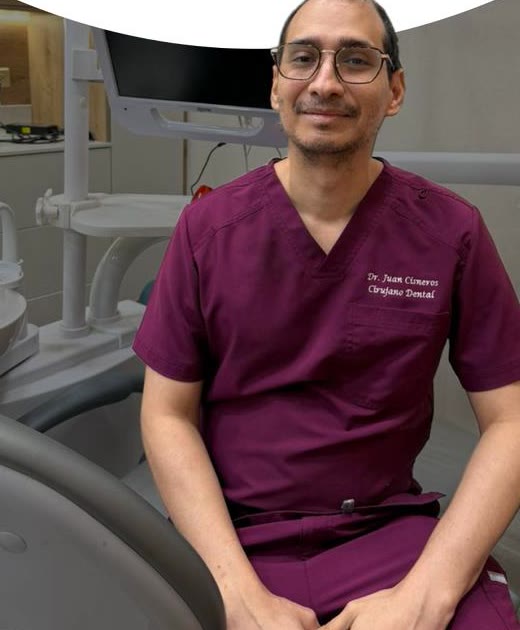
"If a tooth is healthy, my job is to touch it as little as possible. If it's broken, my job is to protect it." Dr. Juan Cisneros, Medical Director
General information, not a diagnosis. Your case is confirmed with a clinical evaluation. Reviewed by Dr. Juan Cisneros, Medical Director, Panamá Sonríe.
Let's talk about your case
Want to see how much your teeth would actually need? Contact us here or call us free: +1 (877) 373-6040. We'll show you in the digital design before anything starts. For costs, see how much veneers cost in Panama. You can also write to us on WhatsApp: +507 6140-5700.
Keep reading
Frequently asked questions
Are no-prep veneers real?
Yes, for ideal patients: healthy teeth, a correct bite and enough space. Otherwise, minimal preparation gives a better result and is safer for the gums.
How much tooth is removed for a veneer?
Usually a few tenths of a millimeter, within enamel. A crown removes more because it covers the whole tooth. An onlay sits in between.
Why would you suggest a crown instead of a veneer?
Because the tooth is already weak: a crack, a large cavity, a big filling or a root canal. A veneer doesn't cover the chewing surface, so it can't protect the tooth from splitting. A crown or onlay can.
Will my teeth be sensitive?
Some sensitivity for a few days is possible. The risk is lower when preparation stays in enamel.
My teeth are very worn and my face looks shorter. Can that be fixed?
Often, yes. If your bite has lost height, the vertical dimension can be raised with veneers, onlays and crowns. It is planned digitally first and tested with temporaries for a while, so you can see and feel the change before the final work.
Can I get veneers on my lower teeth?
Yes, but they usually have less room. We check with a scan of your bite first.
Sources
- Gurel G, et al. Influence of enamel preservation on failure rates of ceramic laminate veneers. Int J Periodontics Restorative Dent. 2013;33(1):31-9. doi:10.11607/prd.1488
- Al-Manei KK, et al. Incidence and influential factors in pulp necrosis and periapical pathosis following indirect restorations: a systematic review and meta-analysis. BMC Oral Health. 2023;23(1):195. doi:10.1186/s12903-023-02826-1
- Klein P, Spitznagel FA, Zembic A, et al. Survival and complication rates of feldspathic, leucite-reinforced, lithium disilicate and zirconia ceramic laminate veneers: a systematic review and meta-analysis. J Esthet Restor Dent. 2025;37(3):601-619. doi:10.1111/jerd.13351
- Zhang S, Xu Y, Ma Y, et al. The treatment outcomes of cracked teeth: a systematic review and meta-analysis. J Dent. 2024;142:104843. doi:10.1016/j.jdent.2024.104843
- Aquilino SA, Caplan DJ. Relationship between crown placement and the survival of endodontically treated teeth. J Prosthet Dent. 2002;87(3):256-63. doi:10.1067/mpr.2002.122014
- No-prep veneer indications and caveats: BMC Oral Health 2023; Inside Dentistry / Aegis 2009. Clinical opinion and case reports, not systematic reviews.
- Prott LS, Pieralli S, Klein P, et al. Survival and complications of partial coverage restorations on posterior teeth: a systematic review and meta-analysis. J Esthet Restor Dent. 2025;37(3):620-641. doi:10.1111/jerd.13353
- Abduo J, Lyons K. Clinical considerations for increasing occlusal vertical dimension: a review. Aust Dent J. 2012;57(1):2-10. PubMed 22369551 · doi:10.1111/j.1834-7819.2011.01640.x
- Abduo J. Safety of increasing vertical dimension of occlusion: a systematic review. Quintessence Int. 2012;43(5):369-80. PubMed 22536588
- Moreno-Hay I, Okeson JP. Does altering the occlusal vertical dimension produce temporomandibular disorders? A literature review. J Oral Rehabil. 2015;42(11):875-82. PubMed 26140528 · doi:10.1111/joor.12326
- Chantler J, Strasding M, Strauss F, et al. Importance of an evaluation phase when increasing the occlusal vertical dimension: a systematic review. J Esthet Restor Dent. 2025;37(3):669-689. PubMed 39404129 · doi:10.1111/jerd.13331
General information; it does not replace a clinical evaluation.