
Is a dentist an artist? Why the hands that prepare your tooth decide how long your smile lasts
An artist's hand and a scientist's method: what the evidence says about dental skill, tooth preparation and how long crowns and veneers last.
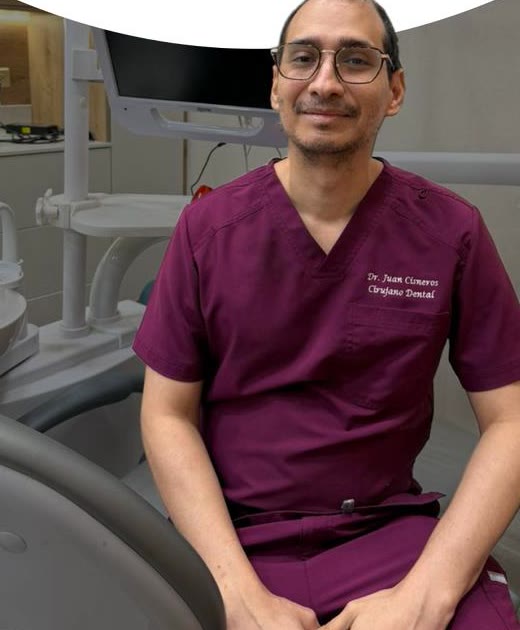
Cosmetic dentistry · Evidence-based · Reviewed by Dr. Juan Cisneros, Medical Director · ~9 min read
A sculptor can fix a mistake by adding more clay. A dentist can't: enamel that is removed never grows back. That is why touching a tooth takes some of the artist (an eye for shape, proportion and color) and a lot of the scientist: measurements, protocols and tenths of a millimeter. Here is what research says about manual skill in dentistry, and why the way your tooth is prepared changes the result and how long the work lasts.
- Yes, there is art, but with rules. A landmark paper on crown preparation calls it "an art form based on scientific principles" (Goodacre, 2001): measurable angles, heights and thicknesses.
- Hand skill matters, and it can be trained. In dental students, handwriting and drawing ability correlate with tooth-preparation quality, and a structured training program improved both dexterity and the quality of the work.
- Preparation decides longevity. Veneers bonded to enamel: 99% survival versus 94% when enamel remained only at the margins; veneers bonded to dentin were about 10 times more likely to fail (Gurel, 2013).
- The operator affects the nerve, too: loss of tooth vitality after crowns and bridges is around 5%, and it was higher when an undergraduate student or a general practitioner did the treatment (Al-Manei, 2023).
- Technology helps, but it does not replace the hand: an intraoral scanner faithfully copies whatever the dentist prepared, good or bad.
Why do people say dentistry is an art?
Because a smile is not measured in millimeters alone. The length of a tooth, its shape, the way it reflects light and how it fits your lips and face are aesthetic decisions. In dentistry, though, that aesthetic sits on a demanding technical foundation.
Crown preparation is the clearest example. A classic review in The Journal of Prosthetic Dentistry literally called it "an art form based on scientific principles." The same review sums up the rules: the walls of a prepared tooth should converge by a total of 10 to 20 degrees, and the tooth stump should be at least 4 mm tall on molars and 3 mm on other teeth so the crown is retained [1]. Creativity lives in the design; precision lives in the execution.
Manual dexterity: a talent you train
Dentistry is one of the professions that demands the most hand-eye coordination. What the research shows:
- Drawing and handwriting. In a study of 71 dental students, the quality of their handwriting and a drawing correlated significantly with their tooth-preparation skill (p < 0.001) [2]. The "artist's hand" is real, and it shows.
- Training improves it. A manual-dexterity training program in 63 students significantly improved their dexterity, the quality of their preparations and their working posture [3].
- Eyesight counts. In 49 students, poor depth perception (stereopsis) was associated with worse finish lines on an incisor preparation, especially when working through a mirror [4].
- See bigger, cut better. In a laboratory study of 18 molars, preparations refined under a microscope (up to ×10) left an average marginal gap of 35.6 microns, versus 145 microns when refined with loupes (×3) [5]. It is an in vitro study, but it shows how much the final fit depends on what the operator can see and control.
The honest conclusion: talent helps, but what makes the difference is repeated training and protocols. Nobody is born knowing how to taper walls at 10 to 20 degrees.
Precision in preparation: what changes by treatment
Veneers: stay in the enamel
A veneer is held on by adhesion (treated ceramic, resin cement and an adhesive protocol), and enamel is the best surface for that bond. In a study of 580 veneers followed for up to 12 years, survival was 99% when the preparation stayed within enamel and 94% when enamel remained only at the margins; veneers bonded to dentin were about 10 times more likely to fail [6]. Another long-term series, with veneers bonded to at least 80% enamel, reported 96% survival at 10 and at 20 years [7].
What does that ask of the dentist's hand? Remove only what the veneer needs, guided by a prior design, without going too deep or too shallow. Some cases do need more reduction (teeth that stick out, strong discoloration): the key is not "never touch the tooth" but "touch it with a plan."
Crowns: geometry that holds
With a crown, the shape of the prepared tooth is what holds it in place. Over-tapered walls or a short stump reduce retention; poorly placed margins irritate the gums. The 2017 World Workshop consensus is clear: when a restoration margin invades the gum attachment above the bone (formerly called "biologic width"), it is associated with inflammation and loss of support [8].
When those rules are respected and the right material is chosen, results are very good: in a review of 67 studies, reinforced glass-ceramic crowns (such as lithium disilicate) had a 96.6% survival rate at 5 years [9].
The tooth's nerve notices, too
Preparing a living tooth generates heat and exposes it. A meta-analysis of 37 studies found that about 5% of vital teeth that receive a crown or bridge lose vitality over the years. That figure was higher when an undergraduate student or a general practitioner did the treatment, and when the tooth wore a temporary for more than two weeks [10]. Technique, experience and timing: once again, the hand and the protocol.
Implants: from plan to mouth
With implants, precision starts before surgery. A meta-analysis of 37 studies and more than 3,100 implants found that, in randomized trials, computer-assisted placement (surgical guide or navigation) was significantly more accurate than freehand placement [11]. Another meta-analysis of 10 randomized trials found that a fully guided approach reduces deviation at the implant entry point by about 1.18 mm compared with freehand [12]. One millimeter sounds small, but it decides where the crown emerges and how the gum looks.
Does the dentist affect how long the work lasts?
Yes, and the literature acknowledges it. A review of 33 long-term studies on resin restorations concluded that dentist factors (who treats and how experienced they are) are among the factors that shorten a restoration's life, while differences between materials matter little when they are properly applied [13]. That review covers direct resin fillings, but the principle repeats with crowns, veneers and implants: the best material cannot make up for a poor preparation.
So when you compare clinics, at home or abroad, don't just ask about the material brand. Ask who prepares your tooth, with what protocol, and who makes the restoration.
How to tell if your tooth is in good hands
Five questions to ask at your consultation:
- Will you show me a design or a mock-up in my mouth before touching a tooth? It is the guide to remove only what is needed.
- How much enamel will you remove, and will dentin be exposed? With veneers, the goal is to stay in enamel whenever the case allows [6].
- Where will the edge of the crown or veneer sit relative to the gum? Respecting the gum protects its health [8].
- Who makes my restoration, and from what material? The lab and the ceramist are part of the result.
- How will my implant be planned? Digital planning beforehand lets the plan be transferred to the mouth more accurately [11], [12].
How we do it at Panamá Sonríe
At Panamá Sonríe, Dr. Juan Cisneros, our Medical Director, and his team of dentists are trained to prepare every case (veneers, crowns and implants) with defined protocols: design first, measured preparation and checks at every step.
They work hand in hand with our own 100% digital dental laboratory, in the same clinic in Panama City:
- Magnification loupes for every preparation: seeing larger helps control reduction and margins more precisely [5].
- Shining 3D Aoralscan Elite Wireless intraoral scanner: records your teeth in 3D, no impression putty, and includes photogrammetry for full-mouth implant cases.
- MetiSmile facial scanner: brings your face, and how you move when you bite, into the design, so the smile fits your features.
- In-house digital design and milling: design and fabrication happen here, with direct communication between the dentist and the lab.
- A master ceramist's hands: our master ceramist, Esteban Pulido, hand-finishes shape, texture and color, the part that is still art. We also make hand-layered feldspathic ceramic and pressed IPS e.max, and ultra-thin veneers only for ideal patients.
- Original MIS implants, with original multi-unit abutments and components: a documented brand with years of published research, as are market references such as Nobel Biocare and Straumann.
- Guided implant surgery in all our cases: we send the CBCT and digital scan to MIS (part of the Dentsply Sirona group), which plans each case with us in MGUIDE and MCENTER. We add our own prosthetic planning: a simulated set of your final teeth guides where each implant goes [11], [12].
- Ceramics only for crowns and veneers: Ivoclar IPS e.max lithium disilicate and multilayer zirconia, digitally designed and milled in our own lab, chosen for what each tooth needs. When a tooth is cracked or heavily restored, a crown or onlay may protect it better than a veneer: see will you file my teeth down?.
Technology copies with precision; judgment and skill decide what gets copied. That combination is what we aim for in every case.
Our rule: we don't do work that is destined to fail. For us, clinical failure is almost always poor planning. That's why we don't restore a tooth with a poor prognosis, and we don't place crowns or veneers when there are bite problems or bruxism (clenching or grinding) without first proposing a comprehensive treatment that addresses them. Following that protocol is what makes success possible.
Experience you can measure. Our lab, supervised by Dr. Juan, makes 300 to 500 crowns and veneers a month. Dr. Juan himself, since he was licensed in 2013, has led more than 500 full-mouth rehabilitations and more than 800 smile makeovers. When the correct protocol is followed, we have had no warranty claims, according to our records.
This guide is general information and does not replace a clinical evaluation. Every case is different: the plan and the result depend on your diagnosis, your health and your aftercare. Reviewed by Dr. Juan Cisneros, Medical Director of Panamá Sonríe.
General information, not a diagnosis. Your case is confirmed with a clinical evaluation. Reviewed by Dr. Juan Cisneros, Medical Director, Panamá Sonríe.
Let's talk about your case
Want to know what your smile needs? Contact us here or call us free: +1 (877) 373-6040. Your video evaluation is free, with no commitment. You can also write to us on WhatsApp: +507 6140-5700.
Keep reading
Frequently asked questions
Why do people say dentistry is an art?
Because besides health, a restoration has to look natural: shape, proportion, texture and color that fit your face. But that art rests on measurable rules; for example, the walls of a tooth prepared for a crown should converge by 10 to 20 degrees and the stump should be at least 3 to 4 mm tall.
How much does the dentist affect how long a crown or veneer lasts?
A lot. Veneers bonded to enamel show about 99% survival versus 94% when enamel remains only at the margins, and loss of tooth vitality after crowns was higher with less experienced operators. Material matters, but it cannot make up for a poor preparation.
How much tooth is removed for a veneer?
It depends on the case. The goal is to remove only what the veneer needs and to stay within enamel whenever possible, guided by a design or a mock-up. Some cases (teeth that stick out or strong discoloration) need a little more; what matters is doing it with a plan.
What is a tooth-preparation protocol?
A standardized sequence of steps: diagnosis, prior design, reduction guide, preparation to defined measurements (thickness, angle and margin position), digital capture and a check before fabrication. Its purpose is to keep the result from depending on improvisation.
Does a digital scanner replace the dentist's skill?
No. An intraoral scanner copies very accurately whatever the dentist prepared, good or bad. Technology improves communication with the lab and fabrication accuracy, but the preparation, the design and the judgment still depend on people.
How can I tell if my dentist prepares teeth well?
Ask whether they will show you a design or a mock-up before touching a tooth, how much enamel will be removed, where the margin will sit relative to the gum, and who will make the restoration. A serious clinic answers clearly.
Sources
According to PubMed (DOI linked when PubMed returns one):
- Goodacre CJ, Campagni WV, Aquilino SA. Tooth preparations for complete crowns: an art form based on scientific principles. J Prosthet Dent. 2001;85(4):363-76. doi:10.1067/mpr.2001.114685
- Al-Johany S, et al. Correlation between handwriting, drawing skills and dental skills of junior dental students. J Contemp Dent Pract. 2011;12(5):327-32. PMID 22269191.
- Neves TC, et al. Manual dexterity in dentistry: development and evaluation of a preclinical training program. J Dent Educ. 2023;87(9):1242-49. doi:10.1002/jdd.13233
- Al-Amad SH, et al. Association between stereoacuity and simulated clinical performance among dental students. J Dent Educ. 2024;88(4):418-24. doi:10.1002/jdd.13429
- Atlas AM, et al. Comparison of loupes versus microscope-enhanced CAD-CAM crown preparations: a microcomputed tomography analysis of marginal gaps. J Prosthet Dent. 2024;131(4):643-51. doi:10.1016/j.prosdent.2022.04.008
- Gurel G, et al. Influence of enamel preservation on failure rates of ceramic laminate veneers. Int J Periodontics Restorative Dent. 2013;33(1):31-9. doi:10.11607/prd.1488
- Layton DM, Walton TR. The up to 21-year clinical outcome and survival of feldspathic ceramic veneers: accounting for clustering. Int J Prosthodont. 2012;25(6):604-12. PMID 23101040.
- Jepsen S, Caton JG, et al. Periodontal manifestations of systemic diseases and developmental and acquired conditions: consensus report of workgroup 3 of the 2017 World Workshop. J Periodontol. 2018;89 Suppl 1:S237-48. doi:10.1002/JPER.17-0733
- Sailer I, et al. All-ceramic or metal-ceramic tooth-supported fixed dental prostheses (FDPs)? Part I: Single crowns. Dent Mater. 2015;31(6):603-23. doi:10.1016/j.dental.2015.02.011
- Al-Manei KK, et al. Incidence and influential factors in pulp necrosis and periapical pathosis following indirect restorations: a systematic review and meta-analysis. BMC Oral Health. 2023;23(1):195. doi:10.1186/s12903-023-02826-1
- Reiff FS, et al. Accuracy of freehand, static, and dynamic computer-assisted implant placement: a systematic review and meta-analysis. J Periodontal Res. 2026;61(2):111-37. doi:10.1111/jre.70047
- Gargallo-Albiol J, et al. Fully guided versus half-guided and freehand implant placement: systematic review and meta-analysis. Int J Oral Maxillofac Implants. 2020;35(6):1159-69. doi:10.11607/jomi.7942
- Demarco FF, et al. Longevity of composite restorations is definitely not only about materials. Dent Mater. 2023;39(1):1-12. doi:10.1016/j.dental.2022.11.009
Keep reading: Will you file my teeth down? · Zirconia vs lithium disilicate veneers · In-house dental lab vs outside lab · Too cheap or too fast to be true? · Veneers in Panama